
Catalogue Platform: Structured Product Catalogue
Overview
A B2B and retail supplier of tiles, marble and sanitaryware needed its range online as a real catalogue rather than a set of brochure pages. We designed the product content model, the taxonomy that sits on top of it and the templates that render it, then wired the whole catalogue into a CMS so the team could add and edit products without a developer. This part covers the catalogue itself; Part 2 covers content operations, analytics and search visibility.
Products modelled
Full build
Product attribute types
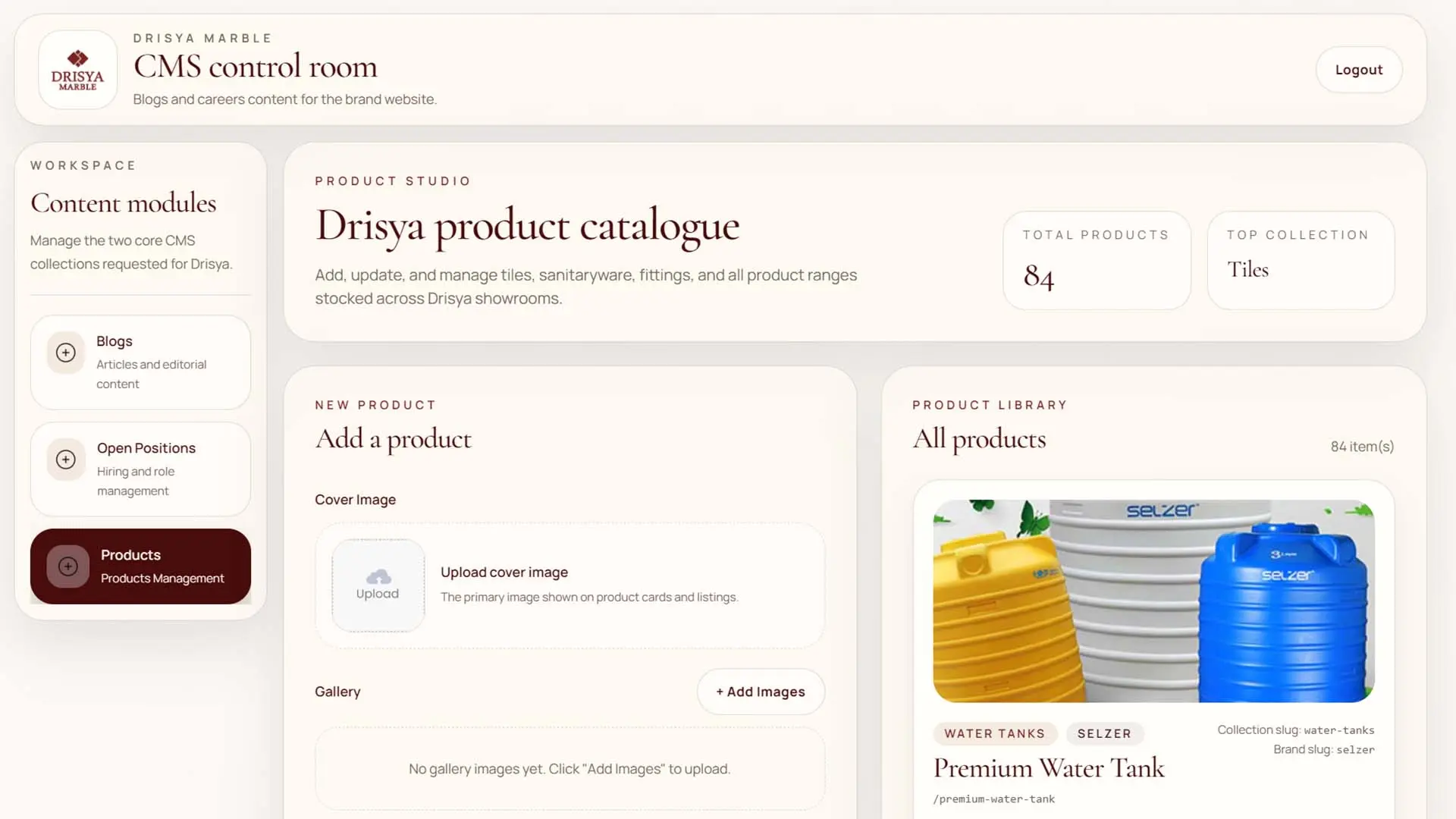
CMS-managed catalogue
The challenge
we had to solve
Stone and tile products vary along many dimensions at once (material, finish, size, thickness, application), and that information lived in price lists, supplier sheets and staff memory rather than in one place. Without consistent attributes there was no way to offer meaningful filters, product pages could not be generated from a template, and every catalogue change depended on someone editing a page by hand. Large, high-resolution product photography also had to load quickly on mobile connections without losing the surface detail buyers judge a slab by.

How we
approached it
We modelled each product as structured content with normalised attributes (category, material, finish, size and application held as controlled reference values rather than free text), so the same data drives listings, filters and detail pages. A faceted taxonomy lets buyers narrow 50+ products by any combination of attributes, with clean, human-readable slugs for every category and product. Product detail templates pull specifications, imagery and related items from the model, images are served as responsive WebP srcsets with lazy loading below the fold, and every product carries an enquiry action that pre-fills the product reference so sales receives context, not just a name and number.
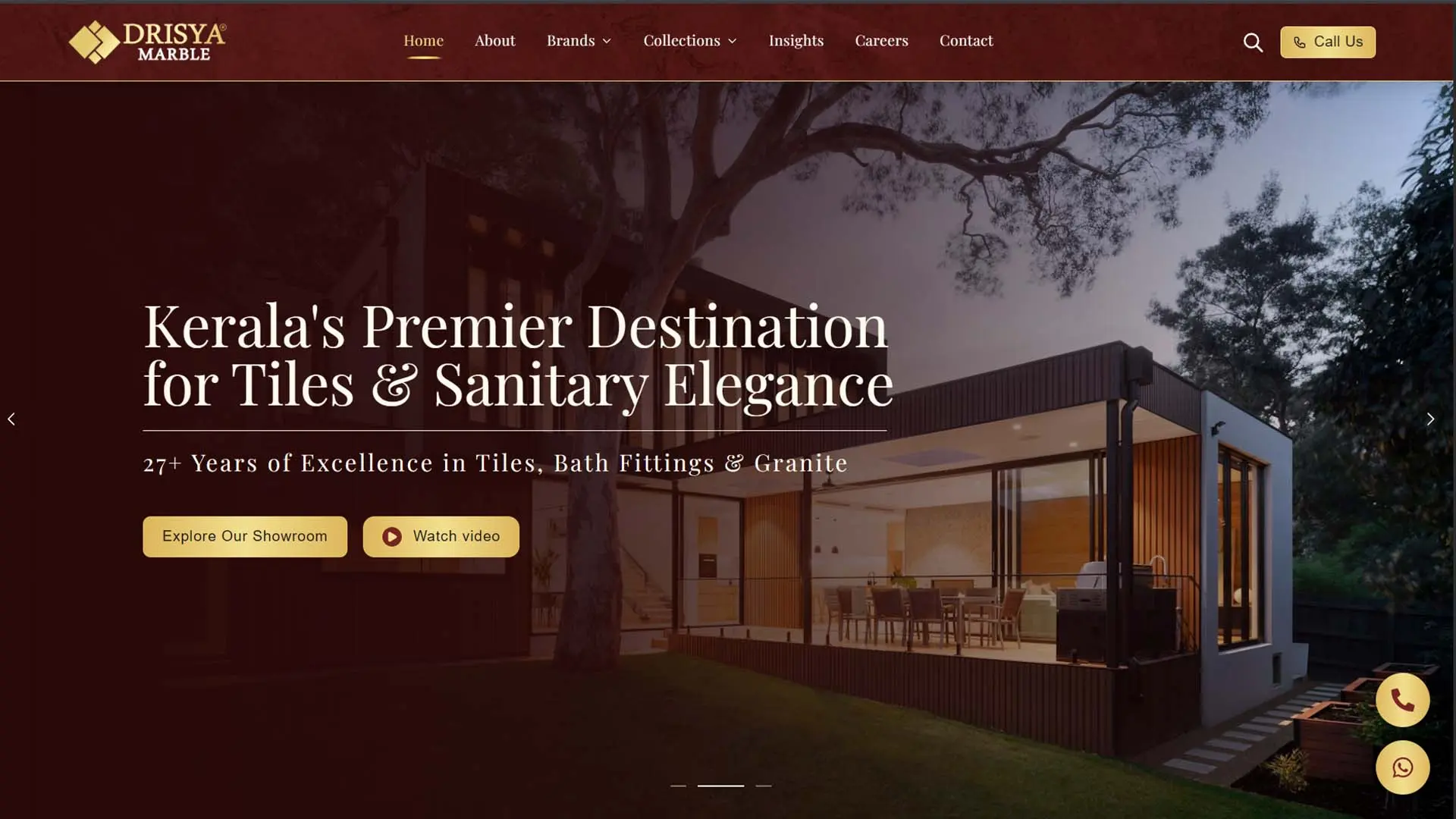
Normalised Product Model
Products, categories, materials, finishes, sizes and applications modelled as linked content types with controlled values, so one edit updates every listing and filter that uses it.
Faceted Taxonomy
Multi-attribute filtering across the catalogue, with a consistent slug strategy for category and product URLs that stays stable as the range grows.
Image Pipeline
Responsive WebP srcsets sized per breakpoint, explicit dimensions to prevent layout shift, and lazy loading so long listing pages stay light on mobile.
Enquiry-on-Product
An enquiry action on every product page that carries the product reference and selected attributes through to the sales team.
Four phases
zero shortcuts
Range Audit & Content Model
Catalogued the existing range, agreed the attribute set and defined content types, reference fields and validation rules in the CMS.
Taxonomy & URL Design
Built the category hierarchy, facet definitions and slug conventions, then mapped every product onto them.
Templates & Image Pipeline
Developed listing, filter and product detail templates, with responsive image generation and lazy loading throughout.
Data Load & Enquiry Flow
Loaded and checked 50+ products, connected product enquiries to the sales inbox and handed the catalogue over to the team.
The work,
in full resolution
Drag to explore. Click to open full screen.
Before vs.
after
We can now manage our entire product catalogue and content easily. The new website made a huge difference to our visibility.
Want results like these? Let's talk about what we can build together.
Start a project