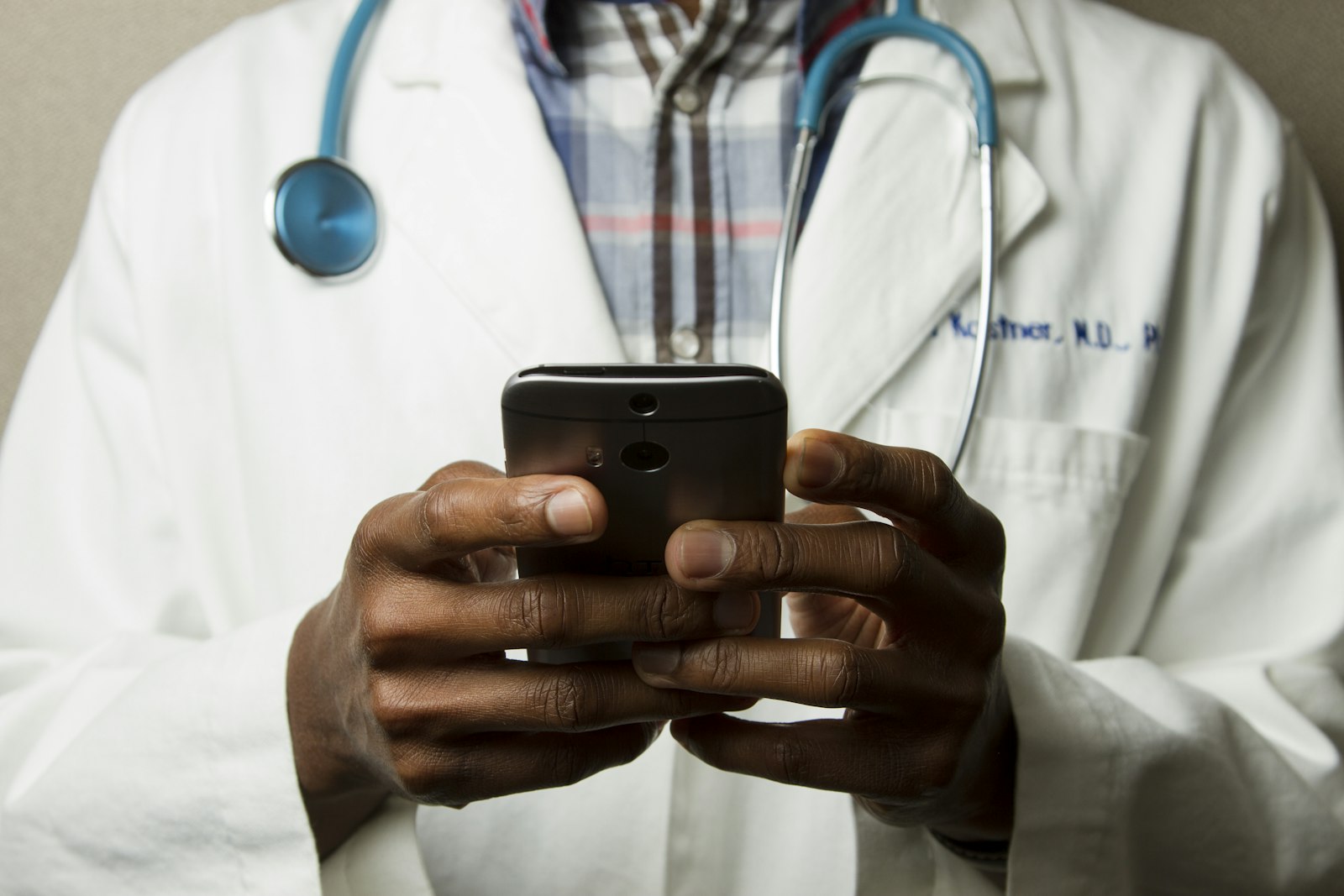
The clearest AI in healthcare examples today are not robots or chatbots that diagnose. They are tools that read images faster, flag deteriorating patients earlier, write the clinic note while the doctor talks, and take routine phone calls off the front desk. Some have strong evidence behind them; many do not yet.
Adoption is now mainstream among doctors. The AMA's 2026 physician survey found that 81% of US physicians report using AI in their practice, up from 38% in 2023, with research summaries and drafting notes or care plans as the top uses. Regulators have kept pace: the FDA's public list of AI-enabled medical devices passed 1,500 authorisations in early 2026, and roughly three quarters of them are in radiology.
Below are real examples of AI in healthcare, grouped into clinical, operational and administrative work, with the evidence level for each and links to deeper guides.
How to read these AI in healthcare examples
Each example comes with a short evidence label, because "deployed somewhere" and "proven to help patients" are very different claims.
| Evidence label | What it means |
|---|---|
| Regulator cleared | Authorised as a medical device (for example by the FDA) for a specific use |
| Trial evidence | A randomised or prospective study showed a measurable effect |
| Large deployment | Used at scale by a named health system, with published or reported results |
| Vendor reported | Figures come from the vendor or customer press releases |
Clinical AI in healthcare examples
These are the uses closest to diagnosis and treatment, and the most regulated.
- Diabetic retinopathy screening. IDx-DR (now LumineticsCore) received FDA De Novo authorisation in 2018 as the first autonomous AI diagnostic system, reading retinal photos in primary care without a specialist. Regulator cleared. Similar tools now support large screening programmes in India.
- Stroke triage. Viz.ai's large vessel occlusion software, authorised by the FDA in 2018, flags suspected strokes on CT angiography and alerts the stroke team by phone. Regulator cleared, large deployment.
- Radiology triage and worklists. Tools from vendors such as Aidoc prioritise scans with suspected bleeds, embolisms or fractures so they are read first. Regulator cleared.
- Breast cancer screening. In February 2025 the UK announced the EDITH trial, testing AI as a second reader on mammograms for roughly 700,000 women across NHS screening sites. Trial under way.
- Low ejection fraction from a routine ECG. Mayo Clinic's EAGLE trial, published in Nature Medicine in 2021, found an AI-ECG raised the diagnosis of low ejection fraction by about a third in primary care. Trial evidence.
- Sepsis early warning. Johns Hopkins' TREWS system, studied across five hospitals and published in Nature Medicine in 2022, was associated with lower mortality when clinicians confirmed the alert promptly. Large deployment with prospective evidence. Our AI sepsis early warning guide covers what worked and what failed.
- Digital pathology. Paige Prostate received FDA De Novo authorisation in 2021 to help pathologists find suspicious areas on prostate biopsy slides. Regulator cleared.
- Clinical question answering. Evidence tools such as OpenEvidence are widely used by US doctors to search the literature; usage figures are largely company reported. Vendor reported.
- Tuberculosis and chest X-ray screening. AI chest X-ray readers are used in TB case-finding programmes in India and other high-burden countries, where radiologists are scarce. Large deployment.
Documentation and clinician workload
This is where AI has spread fastest, because it saves time without making a diagnosis.
- Ambient AI scribes. The Permanente Medical Group in California rolled out an ambient scribe to 7,260 physicians across about 2.5 million encounters between October 2023 and December 2024. Its published analysis estimated about 15,800 hours of documentation time saved over a year. Large deployment.
- Randomised evidence on scribes. A UCLA trial in NEJM AI compared two scribes with usual care across 238 physicians; one tool cut time-in-note by about 9.5% and the other showed no significant change, with modest gains in burnout measures. Trial evidence.
- Drafted replies to patient messages. Stanford Health Care piloted LLM-drafted replies to patient portal messages in 2023; clinicians reported lower task load, but reply time did not fall. Pilot evidence.
- Discharge summaries and patient instructions. Hospitals use LLMs to draft discharge summaries and plain-language instructions for clinician review, including translation into the patient's own language.
For a full explanation of how scribes work and what to check before buying one, read our AI medical scribe guide.
Operational AI in hospitals
Operational AI improves how beds, theatres, staff and supplies are used. It rarely needs device clearance but still needs good data.
- Bed and patient-flow forecasting. Command centres use predicted admissions and discharges to plan beds hours or days ahead.
- Operating theatre scheduling. Models predict case durations from surgeon, procedure and patient factors, reducing overruns and idle time.
- Staff rostering. Demand forecasts drive nurse and doctor rosters in emergency departments and wards.
- No-show prediction. Clinics predict which patients are likely to miss appointments and send extra reminders or overbook carefully.
- Inventory and pharmacy demand. Consumption forecasting reduces stock-outs and expiry write-offs.
- Virtual nursing support. Remote nurses supported by monitoring tools handle admissions, discharges and education for bedside teams.
Many of these start with clean data rather than clever models, which is why health data analysis work often comes first.
Administrative and patient-access examples
Administrative AI is where hospitals in India and the UAE usually see the quickest returns, because the volume is high and the rules are clear.
- Medical coding. Autonomous and assisted coding tools suggest ICD and procedure codes from notes for coders to confirm.
- Denial prediction and appeals. Models flag claims likely to be denied before submission; generative tools draft appeal letters.
- Prior authorisation. Agents assemble clinical documentation for payer requests, and in the US, CMS began testing AI-assisted review on the payer side in 2026.
- Patient call handling. Voice agents take rescheduling, reminder and routine information calls and pass anything clinical to staff.
- WhatsApp and chat assistants. Booking, report delivery and FAQs over messaging, which matters most in India and the Gulf.
- Document intake. Vision models read referral letters, insurance cards and lab reports into structured fields.
Where AI in healthcare has failed, and what to learn
The failures are as instructive as the successes.
- The Epic Sepsis Model. An external validation published in JAMA Internal Medicine in 2021 found the widely deployed model performed far worse than its developer reported, missing most sepsis cases while alerting on many patients who did not have it. Lesson: validate on your own patients before go-live.
- AI scribes in Ontario. In May 2026 Ontario's Auditor General reported that most of the 20 approved AI scribe tools produced inaccurate or fabricated content in testing, and that several vendors were approved without required security or privacy assessments. The province said it knew of no patient harm. Lesson: independent testing and clinician sign-off of every note are not optional.
- Drafted messages that did not save time. The Stanford pilot improved how clinicians felt but not how long replies took. Lesson: measure the outcome you care about, not just satisfaction.
How to judge an AI example before you copy it
A deployment that worked at a large US academic centre may not work in a 200-bed hospital in Kerala or a clinic group in Dubai. Before adopting any example from this list, ask five questions.
- What exactly was measured: time, accuracy, patient outcomes, or only satisfaction?
- Who were the patients, and do they resemble yours in age, language, disease mix and equipment?
- What did the workflow around the tool look like, and who acted on its output?
- Was the result published, independently audited or only announced by the vendor?
- What did it cost to integrate and run, including staff time for review?
If you cannot answer at least three of these, treat the example as inspiration rather than evidence, and plan a local pilot with a baseline measurement before committing to a full rollout. Many hospitals also find that the data needed for a clinical AI tool, such as clean vitals, structured lab results or reliable timestamps, is not yet captured consistently. In that case, the first project is fixing the data flow, and the AI comes second.
Pros and cons of AI in healthcare
| Pros | Cons |
|---|---|
| Faster reads and earlier alerts in imaging and acute care | Models can degrade when patient mix or equipment changes |
| Less documentation time and burnout for clinicians | Hallucinated or omitted details in generated notes |
| Round-the-clock patient access for routine requests | Privacy and data residency obligations (HIPAA, UK GDPR, UAE law, DPDP) |
| Better use of beds, theatres and staff | Alert fatigue if thresholds are poorly tuned |
| Scales scarce specialists in screening programmes | Bias when training data does not match the local population |
Will AI replace doctors?
No credible deployment today replaces a doctor's judgement. Every cleared diagnostic tool is designed either to assist a clinician or, in narrow cases like retinal screening, to triage patients to a specialist. The real change is in what doctors spend time on: less typing and searching, more time with patients, and new oversight duties for the AI itself.
How Algon approaches this
Algon, a Kochi-based engineering team working with hospitals and clinics in India, the UAE and the USA, usually starts AI work inside the hospital's own operating system: front desk, OPD, billing and follow-up. We build AI agents for healthcare and clinical documentation AI on top of clean, connected records, give each tool a named owner, and have staff confirm outputs in the early weeks so corrections improve the system.
Conclusion
The best AI in healthcare examples share three traits: a narrow job, evidence from real patients, and a human who stays accountable. Imaging triage, sepsis alerts, AI-ECG, ambient scribes and administrative automation all meet that bar in some settings. Use these examples to choose a first project, then validate it on your own data before you scale. For an India-focused view of hospital use cases, see AI in hospital management.
Frequently asked questions
What are examples of AI in healthcare today?
Common examples include AI that triages CT scans for stroke or bleeds, screens retinal photos for diabetic retinopathy, flags sepsis risk, detects weak heart function from an ECG, writes clinic notes from conversation, predicts no-shows, suggests medical codes and handles routine patient calls.
How is AI used in hospitals?
Hospitals use AI in three areas: clinical support such as imaging triage and early-warning scores, operations such as bed and theatre planning, and administration such as coding, claims, scheduling and patient communication. Administrative uses are usually the easiest place to start.
What are the pros and cons of AI in healthcare?
The main benefits are faster reads, earlier alerts, less documentation time and better use of staff and beds. The main risks are errors or hallucinations, models that degrade on new populations, alert fatigue, bias and privacy obligations. Local validation and human oversight address most of them.
Will AI replace doctors?
No. Cleared AI tools assist clinicians or triage patients to them; none credibly replaces clinical judgement. AI is changing how doctors spend time, with less typing and searching and more oversight of AI outputs.
How many doctors use AI?
The AMA's 2026 survey of 1,692 US physicians found 81% report using AI in their practice, up from 38% in 2023. The most common uses were summarising research and drafting notes, discharge instructions or care plans.
What is the future of AI in healthcare?
Expect more AI agents in administration, broader use of ambient documentation, foundation models that cover many imaging findings at once, and stricter regulation of generative AI. Evidence requirements and local validation will matter more as tools move closer to clinical decisions.