A clinical decision support system (CDSS) is software that gives clinicians patient-specific information or recommendations at the point of care, such as a drug interaction alert, a dose calculator, a sepsis risk score or a suggested order set. It does not replace the clinician's judgement; it puts the right knowledge in front of them at the moment they decide.
CDSS has been around for decades, but three things changed recently. Standards like CDS Hooks now let outside services plug into EHR workflows. The US FDA revised its clinical decision support software guidance in January 2026, changing which tools count as medical devices. And AI, including large language models, is moving CDSS from fixed rules towards predictions and generated suggestions, with new evaluation problems.
This guide explains the types of clinical decision support systems, real examples, the standards and rules that apply, how to avoid alert fatigue, and how to evaluate a CDSS before it reaches patients.
What is a clinical decision support system?
A clinical decision support system is a health IT tool that combines patient data with clinical knowledge to produce assessments or recommendations that help a clinician make a decision about a specific patient. Inputs come from the EHR or HIS (diagnoses, medications, allergies, labs, vitals); knowledge comes from guidelines, drug databases or trained models; outputs appear as alerts, reminders, order sets, calculators, dashboards or ranked suggestions inside the clinician's workflow.
Types of clinical decision support systems
CDSS can be grouped by how they reason and by how they reach the clinician.
| Type | How it works | Examples | Strength | Weakness |
|---|---|---|---|---|
| Knowledge-based (rules) | If-then logic from guidelines and drug databases | Drug-drug interaction, allergy and dose alerts | Transparent, predictable | Noisy if rules are broad; hard to maintain |
| Statistical or ML-based | Models trained on historical patient data | Sepsis and deterioration scores, readmission risk | Finds patterns rules miss | Can drift and perform worse on new populations |
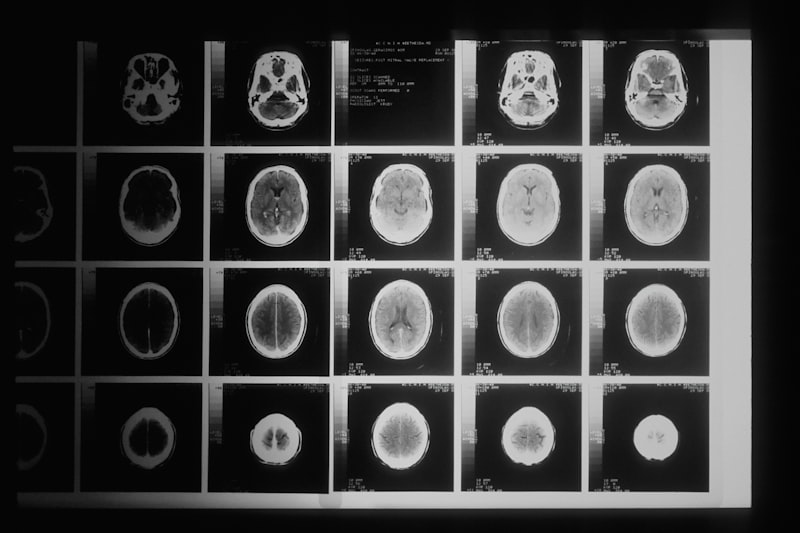
| Imaging and signal AI | Deep learning on images or waveforms | Stroke triage on CT, AI-ECG for weak heart function | High accuracy on narrow tasks | Narrow scope, needs device clearance |
| Generative (LLM-based) | Language models summarise or suggest | Literature answers, draft differentials, summaries | Flexible, handles free text | Hallucination, hard to validate |
By delivery, CDSS is either active (it interrupts, for example a pop-up alert when an order is signed) or passive (it is available when wanted, for example an order set, an infobutton or a dashboard). Active support is powerful but costly in attention; use it sparingly.
Clinical decision support system examples
- Medication safety. Drug-drug interaction, drug-allergy, duplicate therapy, and renal or weight-based dose checks during prescribing. The most common CDSS worldwide.
- Order sets and protocols. Pre-built bundles for conditions like chest pain, stroke or sepsis, so the right tests and treatments are ordered together.
- Risk scores. Early warning scores (NEWS2 in the UK), sepsis prediction, falls and pressure-injury risk for nursing.
- Preventive care reminders. Overdue screenings, vaccinations and chronic disease checks in primary care.
- Diagnostic support. Imaging triage, AI-ECG and pathology tools that flag findings for review.
- Nursing CDSS. Fluid balance prompts, escalation rules tied to vital signs and care-plan suggestions.
- Antimicrobial stewardship. Prompts to review antibiotics at 48-72 hours and suggest narrower options based on culture results.
Sepsis prediction is the classic cautionary tale: the widely used Epic Sepsis Model performed far worse in an external validation published in 2021 than its developer had reported. Our AI sepsis early warning post covers what worked and what failed.
How CDSS connects to the EHR: CDS Hooks and SMART on FHIR
Historically, CDSS had to be built inside each EHR. CDS Hooks, an HL7 standard, changed that. The current published version, v2.0.1, is a Standard for Trial Use based on FHIR R4.
It works like this:
- The EHR (the CDS client) calls an external CDS service when a defined workflow event, called a hook, happens.
- Common hooks include patient-view (a chart is opened), order-select (a clinician picks an order) and order-sign (orders are about to be signed).
- The EHR sends context, such as the patient and draft orders, and the service can fetch more data through FHIR.
- The service returns cards: short messages with information, suggested actions or a link to launch a SMART on FHIR app for more detail.
- The clinician accepts, changes or dismisses the suggestion, and feedback can be returned to the service.
Major US EHRs support CDS Hooks to varying degrees, so test the exact hooks and resources your EHR exposes. In India and the UAE, where many hospitals run local HIS products, the same pattern can be built as an internal event and API layer even when the HIS does not support CDS Hooks natively. Our HL7 FHIR integration guide explains the underlying resources.
FDA rules: when is CDS software a medical device?
In the US, the 21st Century Cures Act excludes some CDS software from the definition of a medical device if it meets four criteria: it does not analyse medical images or signals; it displays or analyses medical information; it supports a healthcare professional's recommendations; and it lets the professional independently review the basis of the recommendation, rather than relying on it.
The FDA issued a revised CDS guidance on 6 January 2026, replacing the 2022 version. According to Covington's summary of the changes, the FDA said it would not enforce device requirements for CDS that gives a single recommendation where that is the only clinically appropriate option, and moved its concern about time-critical use into the fourth criterion, on whether clinicians can independently review the basis. The guidance still covers clinician-facing software only and does not specifically address AI.
For other markets: in the UK, CDSS used in the NHS needs clinical safety cases under DCB0129 and DCB0160, and some tools are medical devices under MHRA rules; in the EU, decision support software is often a medical device under the MDR; in India, CDSCO regulates software as a medical device. Our post on AI medical device regulation compares FDA and CDSCO in detail.
Alert fatigue: the main reason CDSS fails
Clinicians override most interruptive alerts. A systematic review in JMIR Medical Informatics found average override rates ranging from 46.2% to 96.2% across studies of computerised order entry alerts, and many overrides were judged clinically appropriate. When most alerts are noise, the important ones get ignored too.
Ways to reduce alert fatigue:
- Turn off or downgrade low-value alerts, such as minor interactions, after reviewing override data.
- Make alerts patient-specific: use renal function, weight, age and current medications, not drug pairs alone.
- Move non-urgent advice from pop-ups to passive displays.
- Target the right role: some alerts belong with the pharmacist, not the prescriber.
- Track override rates and reasons by alert, and review them quarterly with clinicians.
A widely used framework is the "five rights" of CDS: the right information, to the right person, in the right format, through the right channel, at the right time in the workflow.
AI clinical decision support: what changes
AI-based CDSS brings new strengths and new failure modes. Models can find patterns rules miss, but they can also degrade silently when patient mix, documentation habits or lab equipment change. Generative tools can summarise a record or suggest a differential, but may invent details.
For AI CDSS, add these to the usual checks:
- Validate on your own patients before go-live, not only on the vendor's data.
- Check performance across age, sex, language and other subgroups.
- Run silently first: compare the model's outputs with what clinicians did, without showing them.
- Monitor calibration and alert volumes monthly after go-live.
- Show the basis for each recommendation so clinicians can review it.
- Re-validate after every model update.
Our guide to evaluating clinical LLMs in hospitals covers test sets, hallucination scoring and hospital testing for generative tools.
CDSS in nursing
Nurses are often the first to see a patient deteriorate, so nursing CDSS deserves its own design. Useful examples include automatic early warning scores calculated from charted vital signs, escalation prompts that tell the nurse who to call and how fast, fall and pressure-injury risk assessments that generate care tasks, medication administration checks at the bedside using barcodes, and fluid balance alerts. The same rules on alert fatigue apply: nurses already work through long task lists, so prompts must be specific, timely and linked to an action. Involve senior nurses in setting thresholds, and track whether escalations actually lead to a timely review.
How to implement a CDSS in a hospital
- Pick one clinical problem with measurable harm, such as dosing errors in renal impairment or missed deterioration on wards.
- Form a small group: a clinician lead, a pharmacist or nurse, an informatics person and a developer.
- Define the logic or model, the trigger point and the action you want, and agree how success will be measured.
- Build it into the workflow through the HIS or CDS Hooks, preferably as a suggestion with a one-click action.
- Pilot on one ward or clinic, review overrides and outcomes, and refine.
- Roll out with ongoing monitoring and a named clinical owner.
How Algon approaches this
Algon is a Kochi-based team that builds hospital systems, healthcare integrations and AI agents for healthcare for hospitals in India, the UAE and the USA. For decision support we start with a narrow, measurable problem, connect the logic to the hospital's own records and order workflow, run it silently before showing clinicians, and give each rule or model a named clinical owner who reviews override data. Rules stay readable so clinicians can see why each suggestion appears.
Conclusion
A clinical decision support system helps when it is targeted, patient-specific, delivered at the right moment and owned by clinicians. Use CDS Hooks or an equivalent event layer to fit it into the workflow, check the FDA's 2026 criteria and local rules before you build, measure overrides from day one, and validate any AI model on your own patients. Fewer, better alerts beat more alerts every time.
Frequently asked questions
What is a clinical decision support system?
A clinical decision support system (CDSS) is software that combines patient data with clinical knowledge to give clinicians patient-specific alerts, reminders, calculations or recommendations at the point of care. It supports, but does not replace, the clinician's decision.
What are examples of clinical decision support systems?
Examples include drug interaction and allergy alerts, renal dose checks, order sets for conditions like sepsis or stroke, early warning scores, preventive care reminders, antibiotic review prompts, and AI tools that triage CT scans or detect weak heart function from an ECG.
What are the types of CDSS?
The main types are knowledge-based systems using rules from guidelines and drug databases, and non-knowledge-based systems using machine learning. Newer types include imaging and signal AI and LLM-based tools. CDSS can also be active, interrupting the clinician, or passive, available on demand.
Is CDSS software a medical device?
It depends. In the US, CDS that meets four FDA criteria, including not analysing images or signals and letting clinicians review the basis of recommendations, is not regulated as a device. The FDA revised this guidance in January 2026. Other countries apply their own device rules.
What is CDS Hooks?
CDS Hooks is an HL7 standard that lets an EHR call an external decision support service at workflow events such as opening a chart or signing an order. The service returns cards with information or suggested actions. The current published version is v2.0.1, based on FHIR R4.
How do you reduce alert fatigue in CDSS?
Remove or downgrade low-value alerts, make alerts patient-specific, move non-urgent advice to passive displays, send alerts to the right role, and review override rates with clinicians regularly. Studies report average override rates from about 46% to 96%.