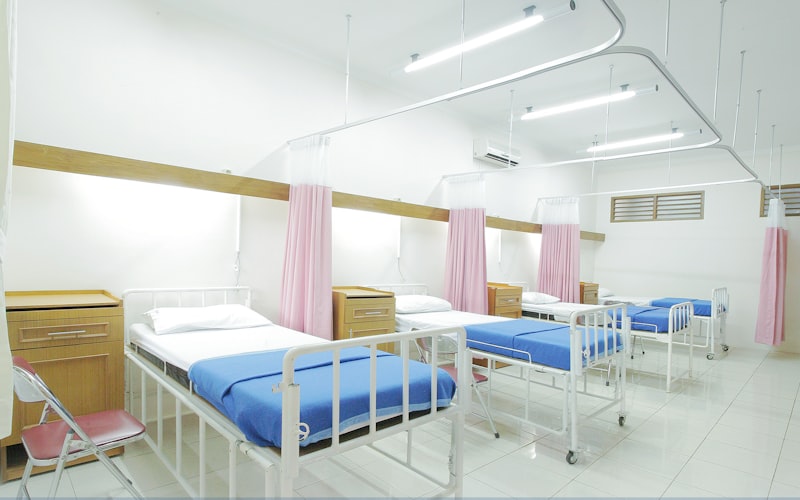
AI operating theatre scheduling uses machine learning on a hospital's own surgical history to predict how long each case will really take, spot block time that surgeons are unlikely to use, and fill gaps with suitable cases. The goal is simple: fewer overruns, fewer idle theatres, fewer late-evening finishes and fewer cancelled patients.
The operating theatre is one of a hospital's most expensive resources and one of the hardest to schedule. Durations vary by surgeon, patient and procedure, and the traditional estimate (the surgeon's guess, or the average of the last few cases) is often wrong. AI does not change the surgery; it improves the plan around it.
This guide explains where AI helps, what the evidence says (including a randomised trial), what vendors report, and how an Indian hospital can start using its own OT data.
Where OT schedules go wrong
Most OT inefficiency comes from a few predictable sources:
- Inaccurate case durations. Over-estimates leave theatres idle; under-estimates cause overruns, overtime and cancellations.
- Unused block time. Surgeons or departments hold blocks they do not fill, and release them too late for others to use.
- First-case late starts. Patient not ready, consent pending, anaesthetist delayed.
- Long turnovers. Cleaning, instrument sets and next patient not ready.
- Day-of-surgery cancellations. Incomplete pre-op tests, unfit patients, no ICU or ward bed.
AI can help directly with the first two and indirectly with the others.
Use 1: predicting case duration
Machine learning models predict how long a specific case will take using features such as procedure, surgeon, patient age, BMI and comorbidities, anaesthesia type, whether it is a first or later case, and the team.
The strongest evidence is a randomised clinical trial at Memorial Sloan Kettering Cancer Center published in JAMA Surgery in 2021. Across 683 patients on colorectal and gynaecology services, cases scheduled with the machine learning estimate had lower absolute prediction error (49.5 minutes versus 59.3 minutes), and patients spent less time in the facility (148.1 versus 173.3 minutes), without an increase in surgeon wait time between cases.
The same research group later argued in a letter that simply correcting schedulers' systematic bias could achieve similar gains. That is a useful reminder: start by measuring how wrong your current estimates are, and in which direction.
Use 2: predicting and releasing unused block time
Block scheduling gives surgeons or departments reserved theatre time. Unused blocks released at the last minute are mostly wasted. Machine learning models can predict, weeks ahead, which blocks are likely to go unused, based on past booking patterns, surgeon leave and seasonality.
Vendors in this space report results from US health systems. Qventus, for example, reports in its Jackson Health System case study a 4.5% increase in primetime utilisation, 2.4 additional cases per OR per month and two more robotic cases per month across a 45-theatre system. These are vendor-reported figures, not independent evaluations.
Use 3: filling gaps and sequencing
Once you know likely durations and released time, software can suggest cases from the waiting list that fit an open slot, considering surgeon availability, equipment, ICU bed needs and patient readiness. It can also suggest sequencing (for example, shorter or more predictable cases first) to reduce overruns.
Use 4: reducing cancellations
Some hospitals use AI and automation for pre-operative coordination: tracking whether tests, consents, fitness and insurance pre-authorisation are complete, and flagging at-risk cases days ahead. Vendors report reductions in cancellations from this work, but the core is good workflow automation more than advanced AI.
| Problem | AI or automation approach | Evidence level |
|---|---|---|
| Wrong case durations | ML duration prediction | Randomised trial (single centre) |
| Late block release | Block release prediction | Vendor-reported |
| Idle gaps | Gap-fill suggestions from waiting list | Vendor-reported |
| Day-of-surgery cancellations | Pre-op readiness tracking | Vendor-reported, workflow-led |
| Late first starts | Readiness checklists and alerts | Mostly process improvement |
The Indian context
Indian hospitals schedule OTs differently from US academic centres, which changes where AI helps:
- Fewer formal blocks. Many private hospitals allocate OT time by surgeon informally or day by day, so block release prediction matters less than duration prediction and gap filling.
- Visiting consultants. Surgeons who operate at several hospitals make availability a major constraint.
- Insurance pre-auth. Cashless approvals can delay planned surgery; tracking pre-auth status belongs in OT readiness.
- Emergency mix. Many OTs handle emergencies alongside electives; models must allow for emergency buffers.
- Data gaps. Many OT registers record only the date and procedure, not wheels-in, incision, closure and wheels-out times.
The data gap is the real barrier. Without accurate timestamps, there is nothing to learn from. Our guide to operation theatre management software covers the module that captures them.
What data you need
| Data item | Why it matters |
|---|---|
| Wheels-in and wheels-out times | Real theatre occupancy |
| Anaesthesia start and end | Separates anaesthesia from surgical time |
| Incision and closure times | Pure surgical duration |
| Procedure codes (standardised) | Groups similar cases |
| Surgeon and anaesthetist | Strong predictors of duration |
| Patient factors (age, BMI, ASA grade) | Complexity adjustment |
| Turnover start and end | Cleaning and set-up time |
| Cancellation reason | Targets pre-op fixes |
Twelve months of complete data is a reasonable minimum for a first model, more for low-volume procedures.
How to start
- Capture timestamps. Make the OT module record the key times reliably, ideally at the point of care on a tablet in each theatre.
- Standardise procedure names. Free-text procedure names ("lap chole", "laparoscopic cholecystectomy") must map to one code.
- Measure current accuracy. Compare scheduled with actual durations by surgeon and procedure. This alone often reveals systematic bias.
- Build a simple model. Start with procedure and surgeon history; add patient factors later. Gradient boosting models are a common, practical choice.
- Show predictions to schedulers. Display the predicted duration beside the surgeon's estimate; let humans decide.
- Track utilisation and overruns. Measure primetime utilisation, overrun minutes, late finishes and cancellations monthly.
- Add gap filling. Once predictions are trusted, suggest waiting-list cases for open slots.
A worked example: finding your estimate bias
Before building any model, do this simple exercise with three to six months of data. It is illustrative, but most hospitals find something similar.
- Export each case with procedure, surgeon, scheduled duration and actual wheels-in to wheels-out duration.
- Calculate the error for each case: actual minus scheduled.
- Group by procedure and surgeon. For each group, look at the average error and how much it varies.
- Look for consistent bias. You may find that one surgeon's laparoscopic cases consistently run 20 to 30 minutes longer than booked, while another's joint replacements finish early. Consistent bias is easy to correct even without machine learning.
- Look for high variability. Groups where the error swings widely are where a model using patient factors adds the most value.
- Share findings privately. Discuss results with each surgeon individually, framed as improving their lists, not as a ranking.
This exercise often pays for itself by improving schedules immediately, and it shows exactly where machine learning will help.
Questions to ask a vendor or development partner
- What data does the model need, and how much history?
- Is the model trained on our data, or on other hospitals' data?
- How is prediction accuracy measured and reported to us, by procedure and surgeon?
- Can schedulers see why a prediction was made (the main factors)?
- Does it handle emergency cases and add-on lists?
- How does it integrate with our OT module, pre-op workflow and bed planning?
- Who owns the model and data if we stop using the product?
Metrics that matter
- Primetime utilisation: share of staffed theatre hours used for surgery.
- Overrun minutes: time past scheduled end, which drives overtime.
- First-case on-time start: a strong indicator of readiness.
- Turnover time: wheels-out to next wheels-in.
- Day-of-surgery cancellations: with reasons.
- Prediction error: average absolute difference between predicted and actual duration.
Common mistakes
- Buying AI before fixing data capture. No timestamps, no model.
- Forcing predictions on surgeons. Use them to inform, not override.
- Ignoring emergencies. Leave buffers in the schedule based on historical emergency demand.
- Optimising theatres alone. A full OT schedule with no ICU or ward beds causes cancellations. Link OT plans to bed planning and the hospital command centre.
How OT scheduling links to the rest of the hospital
A theatre schedule is only as good as the beds, staff and supplies behind it. Better duration predictions are most valuable when they feed other plans:
- Ward and ICU beds: predicted end times tell bed managers when post-operative patients will need a bed, so they can plan discharges in advance.
- Pre-operative readiness: the scheduled list drives reminders for investigations, fitness reviews, consent and insurance pre-authorisation.
- Sterile services and consumables: knowing the real sequence of cases helps the CSSD prepare instrument sets and the store issue implants on time.
- Staff rosters: realistic finish times reduce unplanned overtime for nurses, technicians and anaesthetists.
How Algon helps
At Algon, we build OT modules that capture the right timestamps inside the hospital management system, then add duration prediction and gap-fill suggestions through machine learning work trained on the hospital's own history. Dashboards for OT managers sit alongside the hospital KPIs dashboard.
Conclusion
AI operating theatre scheduling is most proven in one area: predicting case durations better than human estimates, which a randomised trial showed can reduce patient time in the facility without delaying surgeons. Block release prediction and gap filling are promising, with mostly vendor-reported results. For Indian hospitals, the first step is not an AI product but accurate OT timestamps and standard procedure names. With a year of clean data, a simple model can start improving the schedule within weeks.
Frequently asked questions
How does AI improve operating theatre scheduling?
It predicts case durations from the hospital's own history, forecasts which block time will go unused, suggests waiting-list cases to fill gaps, and flags cases at risk of cancellation, so schedules are more accurate and theatres less often idle or overrunning.
Is there evidence that machine learning improves OT scheduling?
Yes. A randomised trial at Memorial Sloan Kettering published in JAMA Surgery in 2021 found ML-based durations reduced prediction error (49.5 vs 59.3 minutes) and patient time in the facility (148.1 vs 173.3 minutes) without increasing surgeon wait time.
What data is needed for AI OT scheduling?
At least a year of wheels-in and wheels-out, anaesthesia and incision times, standardised procedure codes, surgeon and anaesthetist, patient factors such as age and ASA grade, turnover times and cancellation reasons.
What is block release prediction?
A model that forecasts, weeks in advance, which reserved surgeon or department blocks are likely to go unused, so the time can be released early and offered to others.
What is a good OT utilisation rate?
Targets vary by hospital and case mix. Many hospitals track primetime utilisation alongside overruns and cancellations, because pushing utilisation too high increases overtime and late finishes.
Can small Indian hospitals use AI for OT scheduling?
Yes, if they capture accurate OT timestamps and standardise procedure names. A simple model using procedure and surgeon history can improve duration estimates, and gap filling helps hospitals without formal block systems.