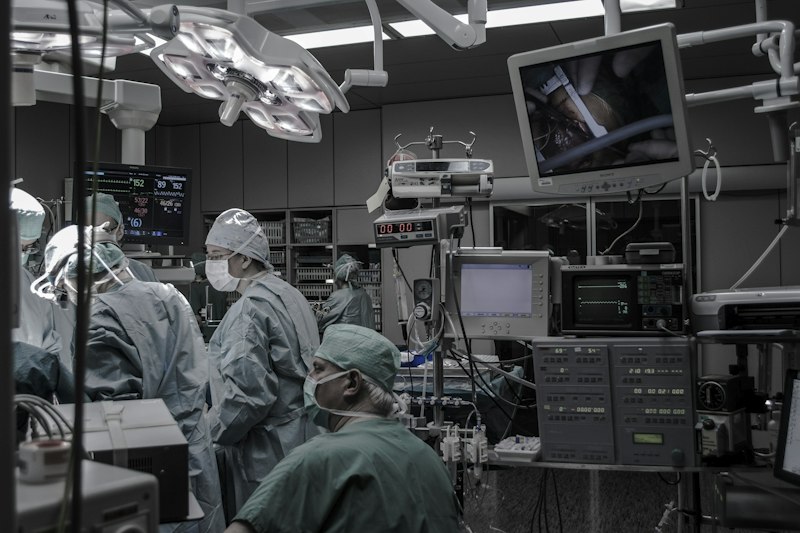
Hospital at home is inpatient-level care delivered in the patient's own home, for patients who would otherwise be admitted to a ward. It is not routine home nursing or physiotherapy. The patient is formally admitted, a hospital team is clinically responsible, nurses or paramedics visit at least daily, vitals are monitored remotely, and an emergency response can reach the house quickly.
In the US the model has moved from pandemic experiment to a durable programme. The Medicare Acute Hospital Care at Home waiver, first created in November 2020, was extended through September 30, 2030 by the Consolidated Appropriations Act, 2026. In India, there is no formal "hospital at home" payment route yet, but hospital-anchored home care has grown steadily, and some hospitals already run the pieces.
This guide explains how the US programme actually works, what its rules teach about safety, what the Indian landscape looks like, and what an Indian hospital would need to offer acute care at home responsibly.
What makes it "hospital" at home
The difference between hospital at home and ordinary home care is accountability and intensity. A hospital-at-home patient is an inpatient of the hospital, with the same expectations of daily medical review, nursing assessment, medication, diagnostics and escalation.
Common conditions treated this way in published programmes include heart failure exacerbations, COPD flare-ups, pneumonia, cellulitis and urinary tract infections in otherwise stable patients. The patient must be medically suitable, have a safe home, and usually have a caregiver present.
How the US CMS waiver works
The Medicare waiver lets hospitals bill for inpatient care delivered at home if they meet specific conditions. The core requirements, as summarised by the American Hospital Association when the programme launched, are:
- Admission source: patients can only be admitted from an emergency department or an inpatient bed.
- Initial assessment: an in-person history and physical before home care starts.
- Daily review: a registered nurse evaluates each patient daily, and a physician or advanced practitioner examines each patient daily, in person or remotely.
- Two in-person visits a day: by clinicians; some can be by mobile integrated health paramedics if the RN judges it appropriate.
- Immediate audio connection: the patient can reach a team member at any time who can connect an RN or doctor right away.
- Emergency response within 30 minutes: appropriate emergency personnel must be able to reach the home within 30 minutes.
Status in 2026
The waiver briefly lapsed in early 2026 during a US government shutdown, and some health systems paused new admissions. It was then extended through September 30, 2030 as part of the Consolidated Appropriations Act, 2026, signed on February 3, 2026. According to the American Medical Association, 366 programmes across 139 health systems in 37 states had been approved. The legislation also asks CMS to study the quality and cost of hospital-at-home care compared with inpatient care.
A five-year runway matters because hospital at home needs upfront investment in staff, logistics and technology. Short, uncertain extensions were one reason many hospitals held back.
The operating model behind it
Running hospital at home is a logistics problem as much as a clinical one. Each admission needs people, kit and supplies in the right place, every day.
| Function | What it involves |
|---|---|
| Patient selection | Clinical criteria, home safety check, caregiver availability |
| Command or coordination hub | Nurse coordinators, physician on call, 24/7 phone and video |
| Remote monitoring | Blood pressure, SpO2, heart rate, temperature, weight; alerts to the hub |
| Field visits | Nurses, paramedics, phlebotomy, physiotherapy |
| Medications | Delivery, IV therapy at home, reconciliation, returns |
| Diagnostics | Home sample collection, portable X-ray or ultrasound where available |
| Escalation | Ambulance pathway and direct readmission to a ward bed |
| Discharge | Hand-off to OPD follow-up or ordinary home care |
Most of the technology is not unusual: tablets for video, Bluetooth vital-sign devices, a monitoring dashboard, scheduling and routing for field staff, and the same electronic record used on the wards. The hard part is making all of it work as one admission.
The Indian landscape
India has no equivalent of the Medicare waiver, and private health insurance products generally cover domiciliary hospitalisation only under specific conditions written into each policy. So most home-based acute care today is either self-paid or bundled into a hospital's post-discharge programme.
Still, the building blocks exist:
- Hospital-anchored home care. Apollo HomeCare, set up in 2015, marked ten years and over one million patients served in November 2025, and describes its role as bridging the post-discharge and chronic care gap.
- Standalone home health providers. Companies such as Portea work with hospitals, doctors and diagnostic centres to deliver nursing, physiotherapy and equipment at home.
- Tele-ICU and remote monitoring. Indian providers run hub-and-spoke tele-ICU services and contactless monitoring, which supply the skills a hospital-at-home hub needs. See our guide to remote patient monitoring after discharge.
- Telemedicine rules. The Telemedicine Practice Guidelines issued in 2020 give a framework for remote consultations, though they were not written with home hospitalisation in mind.
Where it makes sense for an Indian hospital
The best early candidates are patients the hospital already knows well, in conditions with clear protocols:
- Early supported discharge after a short inpatient stay (for example, finishing IV antibiotics at home).
- Elderly patients with heart failure or COPD who are repeatedly admitted.
- Post-surgical recovery where the main need is monitoring, wound care and physiotherapy.
- Palliative patients whose families prefer home care with hospital oversight.
Urban hospitals in Kochi, Bengaluru or Chennai have an advantage: shorter travel distances make the two-visit and 30-minute response standards realistic. Rural coverage is much harder.
What you need before launching
- Clinical protocols. Inclusion and exclusion criteria, daily review templates, escalation triggers and readmission rules for each condition.
- A coordination hub. Even a small team: one nurse coordinator per shift and a named physician on call.
- A field team. Nurses who can do IV therapy, sample collection and assessments, with transport.
- Monitoring devices and a dashboard. Validated devices, a way to see readings and alerts, and clear rules on who responds.
- One record. The home admission must live in the same IPD and bed management record as a ward admission, with orders, notes, medication administration and billing.
- Pharmacy and supplies logistics. Delivery, cold chain where needed, and return of unused medicines.
- Consent and data protection. Written consent covering home care and remote monitoring, and DPDP-compliant handling of data from home devices.
- A payment model. Package pricing for self-pay patients, and agreed terms with any insurer.
A worked example: finishing IV antibiotics at home
To make this concrete, here is an illustrative pathway (not a real hospital's data) for a common early candidate: an adult with cellulitis who has improved after two days on the ward but still needs IV antibiotics for several more days.
- Day 2 ward round: the consultant marks the patient as a home-care candidate. The coordination desk checks the address is inside the service radius and a family member will be present.
- Home safety call: a nurse confirms there is a clean space, a working phone and a way to store medicines.
- Transfer to a virtual bed: the HMS moves the admission from the ward bed to a home bed, keeping the same IP number, orders and medication chart.
- First home visit: a nurse places or checks the IV access, gives the first home dose, sets up a thermometer and pulse oximeter, and teaches the family what to watch for.
- Daily routine: two nurse visits for IV doses, a daily video review by the doctor, and readings sent to the desk twice a day.
- Escalation rule: fever above an agreed threshold, spreading redness or falling SpO2 triggers a call from the desk and, if needed, return to the ward through a direct-admit route that skips casualty.
- Discharge: the doctor switches to oral antibiotics, the final bill is generated against the same IP number, and an OPD follow-up is booked.
Each step depends on software that already exists in a good HMS. What changes is the location of the bed and the need for field scheduling.
Mistakes to avoid
- Starting with complex patients. Begin with a single, well-understood condition and strict criteria. Widen later.
- Running it outside the main record. A separate home-care app means duplicate orders, missed medicines and billing gaps.
- Underestimating travel time. Two visits a day per patient across a congested city consume more nurse hours than ward care. Plan routes and service radius carefully.
- No direct-readmission path. If a deteriorating home patient has to queue in casualty, the safety case collapses.
- Leaving families unsupported. Caregivers carry real load. Give them a single number to call and clear written instructions in their language.
- Ignoring insurance early. Clarify with each insurer or TPA what they will pay for before you promise anything to patients.
Measuring whether it works
| Metric | What it tells you |
|---|---|
| Escalations back to hospital | Patient selection and protocol quality |
| Length of stay vs ward equivalent | Efficiency of the model |
| 30-day readmissions | Discharge quality after home episode |
| Response time to alerts and calls | Safety of the coordination hub |
| Patient and caregiver experience | Acceptability and burden on families |
| Cost per episode | Whether package pricing is sustainable |
How software supports hospital at home
Hospital at home multiplies the need for good scheduling, routing, monitoring and documentation. At Algon, we build these as extensions of the hospital management system: virtual beds, home-visit scheduling, device data feeds into the patient record, and alerts to the coordination desk. Patient-facing updates and visit reminders fit well with patient engagement tools such as WhatsApp.
Conclusion
Hospital at home is now an established model in the US, with a waiver secured to 2030 and hundreds of approved programmes. Its rules (two daily in-person visits, daily clinical review, 24/7 contact and a 30-minute emergency response) offer a practical safety standard anywhere. In India, the payer route is still the main gap, but hospital-anchored home care, tele-ICU and remote monitoring already provide most of the building blocks. A hospital that starts with one condition, one coordination desk and a single shared record can learn the model safely.
Frequently asked questions
What is hospital at home?
Hospital at home is inpatient-level acute care delivered in a patient's home instead of a ward. The patient is formally admitted, receives daily clinical review and in-person visits, is monitored remotely, and has access to a rapid emergency response.
Has the US hospital at home waiver been extended?
Yes. The Acute Hospital Care at Home waiver was extended through September 30, 2030 by the Consolidated Appropriations Act, 2026, signed on February 3, 2026, after a brief lapse earlier that year.
What are the requirements of the CMS hospital at home waiver?
Patients must be admitted from an emergency department or inpatient bed, receive an in-person initial assessment, daily RN and physician or advanced practitioner review, at least two in-person clinician visits a day, immediate audio access to the team, and emergency response within 30 minutes.
Is hospital at home available in India?
Not as a formal payer-backed programme. Indian hospitals offer hospital-anchored home care, post-discharge monitoring and home nursing, and some can deliver acute care at home on a self-pay or negotiated basis.
Which patients are suitable for hospital at home?
Medically stable patients with conditions such as heart failure exacerbation, COPD flare-up, pneumonia or cellulitis, who have a safe home and a caregiver, and who live within reach of the visiting and emergency teams.
What technology does hospital at home need?
Validated vital-sign devices, a monitoring dashboard with alerts, video and phone access to a coordination hub, scheduling and routing for field staff, and the home admission recorded in the same HMS as ward patients.